Gold Beach sits at the exact point where the Wild and Scenic Rogue River meets the Pacific Ocean — which means that within five miles of town, in virtually every direction, there is outdoor recreation of a caliber that most places on the West Coast cannot match. The Rogue River Trail runs 40 miles into a wilderness corridor accessible only on foot or by boat. The ocean beaches are wide, uncrowded, and backed by dramatic coastal bluffs. Cape Sebastian, six miles south, provides one of the longest unobstructed coastal views in Oregon. Pistol River, five miles north, is a world-class wave sailing and kiteboarding venue. If outdoor recreation is a priority — and for many Gold Beach buyers it is the priority — this town delivers with a consistency that is worth detailing.
The Rogue River Trail
The Rogue River Trail is 40 miles of backcountry wilderness hiking through the heart of the Wild and Scenic corridor. The trail runs along the river at river level for much of its length, passing through dramatic canyon sections, crossing tributary streams, moving through stands of old-growth Douglas fir and madrone and Port Orford cedar that have never been logged. The elevation gain and loss is significant — this is not a flat riverside stroll — but the reward is commensurate: sections of the Rogue River Trail are among the most beautiful backcountry routes in the Pacific Northwest.
The typical approach is a multi-day backpacking trip, with primitive campsites spaced along the route. The trail can be done as a point-to-point by arranging a jet boat pickup or drop-off at the far end — an approach that allows you to hike in one direction without retracing steps. For Gold Beach residents, the trail's western terminus is accessible within minutes of town. Having a 40-mile wilderness trail beginning practically in your backyard is the kind of amenity that does not appear on a listing sheet but profoundly shapes the quality of daily life for buyers who use it.
Fishing the Rogue
The Rogue River is one of Oregon's most celebrated fishing rivers, and the section accessible from Gold Beach offers world-class opportunities for both salmon and steelhead. Spring Chinook move upriver from April through June, providing the first major fishing push of the year. Fall Chinook arrive September through October — the larger, more abundant run that draws the most attention and the most anglers. Winter steelhead run November through March, providing fishing opportunities through the slower tourist season. The river also holds coastal cutthroat trout year-round.
Guided drift boat trips operate from Gold Beach, running the lower river sections where access to holding pools and productive runs is best. The guides who work the Rogue lower river have typically spent years learning the water's subtleties — where fish hold at different water levels, which runs produce in different seasons, how the tidal influence at the mouth affects the lower sections. For buyers who come to Gold Beach specifically for the fishing, the depth of local guide knowledge and the quality of the fishery itself are both exceptional.
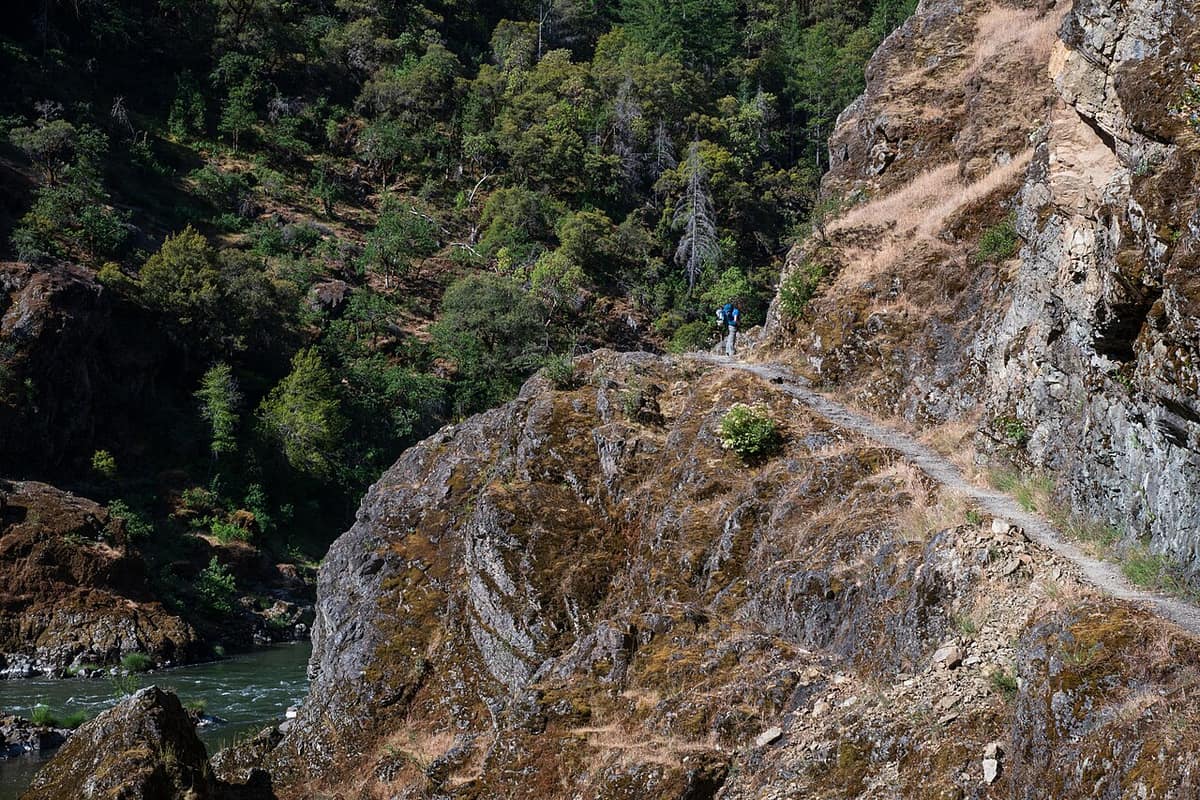
The Rogue's 40-mile wilderness trail is cut into canyon walls high above the river, accessible only by foot or boat — Photo: BLM Oregon & Washington / Wikimedia Commons (CC BY 2.0)
Whitewater Rafting
The Rogue River's Wild and Scenic section is one of the classic multi-day raft runs in the American West. Commercial outfitters based in Gold Beach and the surrounding area run guided raft trips through the wilderness corridor, typically three to five days in length, camping on river sandbars and at established sites. The most dramatic section is Hellgate Canyon — a place where the river compresses between sheer rock walls and accelerates through a series of rapids that require genuine technical skill to navigate safely.
The multi-day Rogue raft trip has been a destination for serious river runners for decades. The combination of wilderness quality — no roads, minimal development, genuine remoteness — with world-class whitewater makes it one of a small number of raft runs on the West Coast that belongs in the same conversation as the Grand Canyon or the Middle Fork of the Salmon. For buyers who raft, living in Gold Beach at the downstream terminus of that run is the equivalent of living at the base of a world-class ski mountain.
Cape Sebastian
Six miles south of Gold Beach on Highway 101, Cape Sebastian State Scenic Corridor provides one of the most expansive coastal viewpoints in Oregon. The cape rises sharply from the ocean, and from the viewpoint at its summit — reached by a short trail from the parking area — the view extends more than fifty miles in both directions on a clear day. To the north, the Gold Beach shoreline and the Rogue River mouth are clearly visible. To the south, the California border is within the horizon. The Pacific stretches west without interruption to Japan.
The trail system at Cape Sebastian is modest — this is a viewpoint destination rather than a major hiking area — but the wildflower meadows along the cape's upper slopes are worth the visit in spring, and the blufftop walk provides continuously changing perspectives on the coast. For Gold Beach residents, Cape Sebastian is a twenty-minute drive that delivers one of the state's great natural vantage points. It is the kind of place you take every houseguest to within the first week of their visit.
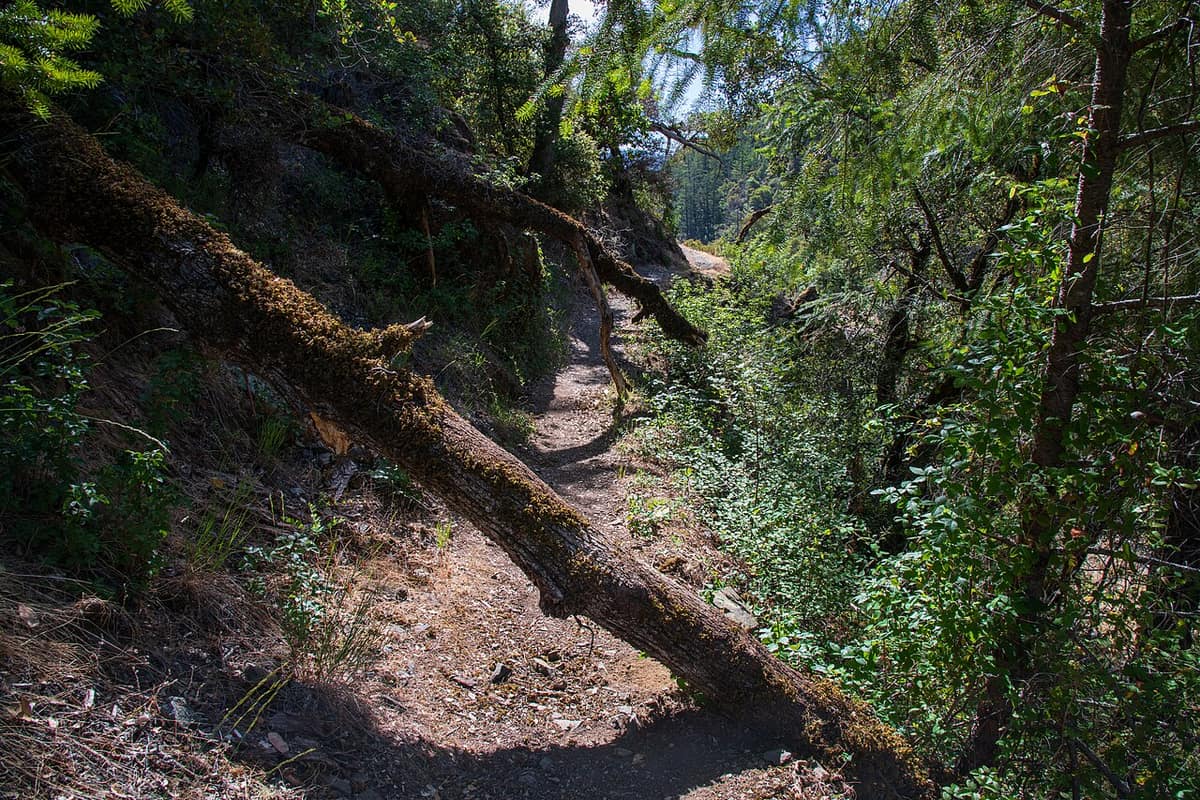
Moss-covered fallen timber and dense forest along the Rogue River Trail in the Wild & Scenic Rogue corridor — Photo: BLM Oregon & Washington / Wikimedia Commons (CC BY 2.0)
Pistol River and the Beaches
Pistol River State Beach, five miles north of Gold Beach, is a wide, flat-sand beach at the mouth of the Pistol River — one of the premier wave sailing and kiteboarding venues in the world, and an equally excellent place for beachcombing, walking, and watching the Pacific weather move through. The combination of river mouth, ocean beach, and consistent onshore wind makes this a dynamic environment that changes with the tides and the season.
Gold Beach's own beaches — the stretches of coast within the town's immediate vicinity — are accessible, sandy, and consistently uncrowded. The southern Oregon Coast does not have the visitor pressure of the northern coast, and the result is a more personal experience of the beach. Otter Point State Recreation Site, north of Gold Beach, provides additional coastal access with dramatic tidepools and basalt outcropping that rewards exploration at low tide.
Indian Creek Trail
For those who want a shorter, more accessible outing from town, the Indian Creek Trail offers a pleasant walk through riparian habitat on the edge of Gold Beach. The trail passes through wildflower meadows in spring — camas, iris, and coastal species — and provides a quick connection to natural surroundings without the drive and logistics of a backcountry trip. It is the kind of trail that gets walked regularly by residents on weekday mornings, the everyday outdoor life that accompanies living in a place with this much natural infrastructure.
The Takeaway: The outdoor recreation around Gold Beach is not a bonus. It is the foundational reason the town exists as a real estate destination. The Wild and Scenic Rogue River trail system, the fishing, the whitewater, the beaches, Cape Sebastian — this is not an amenity list. It is a description of daily life for people who choose Gold Beach intentionally. Buyers who arrive here having researched the outdoor opportunities tend to move here. Buyers who discover the outdoor opportunities after arriving tend to stay for a very long time.
Related reading