Most Oregon Coast towns have restaurants. Tillamook has a food identity. The distinction matters more than it might sound. Cannon Beach has excellent dining, Depoe Bay has great chowder, Newport has a working bayfront with fresh seafood. But Tillamook is the only town on the northern Oregon Coast where the food itself — the production, the sourcing, the agricultural lineage — is the reason people come from hundreds of miles away. Living here means that identity becomes part of your daily life in ways that are genuinely unusual.
This guide is an honest tour of what the Tillamook food scene actually looks like: the destination that draws a million visitors a year, the artisan operations that most visitors miss, the everyday spots that locals actually use, and what it means to grocery shop in a town where the regional specialty is made right down the road.
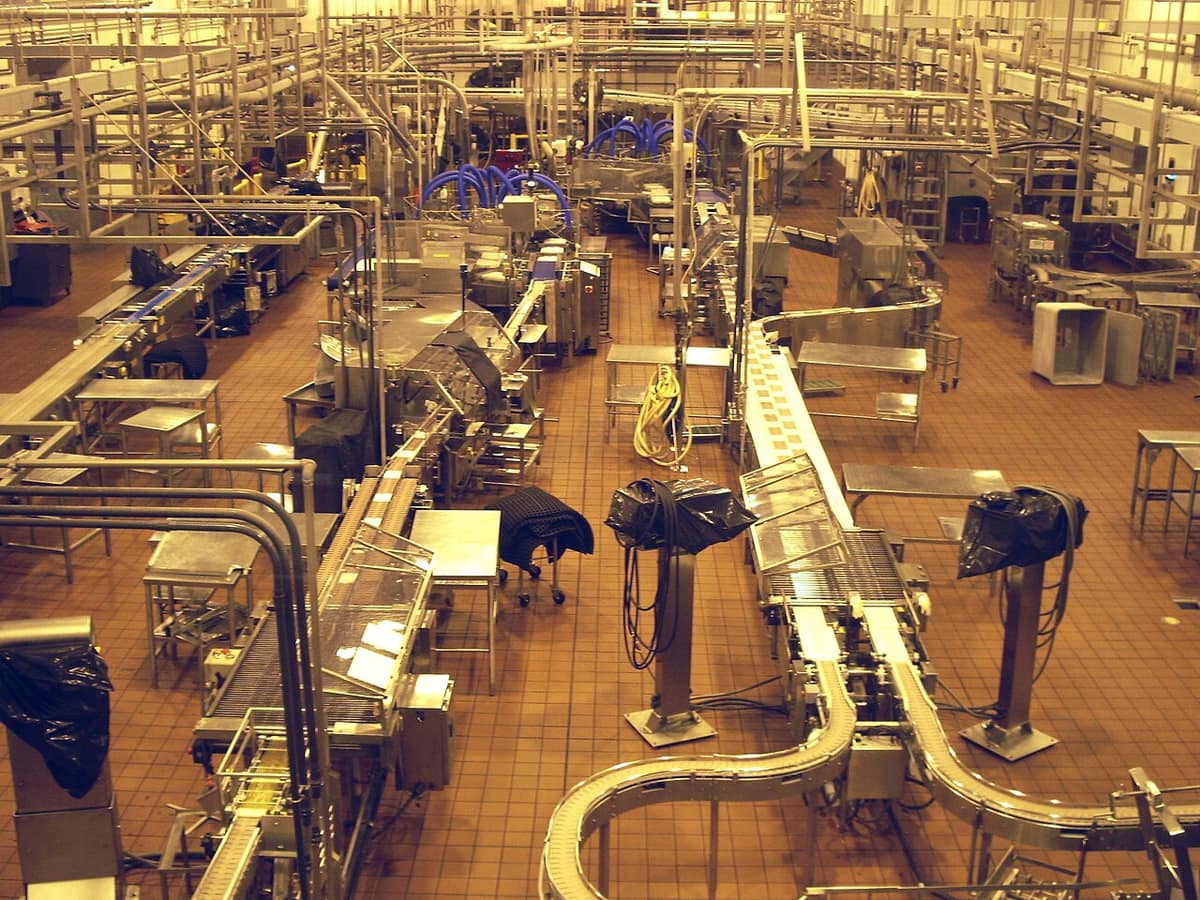
Inside the Tillamook creamery plant, where cheese is processed and packaged — the creamery ships nationally, but the freshest product is here — Photo: EncMstr / Wikimedia Commons (CC BY-SA 4.0)
Where to Start: Tillamook Creamery
The Tillamook County Creamery Association was founded in 1909 as a farmer-owned cooperative — a group of dairy farmers who needed a way to get their milk to market before refrigeration made long-distance transport practical. More than a century later, the cooperative remains farmer-owned, and the facility on Highway 101 north of town has become one of Oregon's most-visited tourist attractions, drawing over a million visitors per year.
The visitor experience is substantial. The renovated facility includes a large museum dedicated to the history of cheesemaking and the cooperative's origins, observation windows where you can watch the actual production process, a full-service cafe, and — most importantly for many visitors — an ice cream counter serving Tillamook's well-regarded flavors alongside free samples of the cheese itself. The creamery has been giving away free cheese samples for decades. It's not a marketing tactic at this point; it's part of the institution's identity.
For residents, the creamery serves a dual function. It's the source of genuine local pride — the operation that put Tillamook's name on grocery store shelves across the country — and it's also a practical food source. The facility's retail operation sells cheese at prices that reflect its proximity to production, and the quality difference between Tillamook cheddar bought at a Portland grocery store and a block purchased at the source is one of those things you notice once and don't forget.
Old Oregon Smokehouse
If Tillamook Creamery represents the town's dairy identity, Old Oregon Smokehouse represents its Pacific Northwest smokehouse tradition. Hardwood-smoked meats and fish have been a feature of Oregon Coast food culture for generations — a practical preservation method that became a culinary tradition. The Smokehouse carries on that tradition with smoked salmon, smoked meats, and artisan products that reflect genuine craft rather than mass production.
The smokehouse is the kind of operation that food-focused visitors to the Oregon Coast often seek out and residents take for granted — until they move away and realize that having a quality regional smokehouse within easy distance is not something every small town offers. For buyers interested in Tillamook, it's worth noting as part of the food infrastructure that makes this a genuinely livable community rather than a bedroom suburb of anywhere.
Blue Heron French Cheese Company
Located just south of the Tillamook Creamery on Highway 101, Blue Heron French Cheese Company offers a more refined food destination than its larger neighbor. The operation produces French-style artisan cheeses and carries a well-selected range of wine, specialty foods, and gifts. The deli and tasting room are the right setting for a slower visit — a place to spend an hour with wine and cheese rather than moving through a production facility.
Blue Heron also hosts events through the year, making it a living part of the local food calendar rather than just a retail stop. For residents, it functions as both an upscale grocery option for specialty food items and an occasional event destination — the kind of neighborhood amenity that's hard to quantify but contributes meaningfully to quality of life.
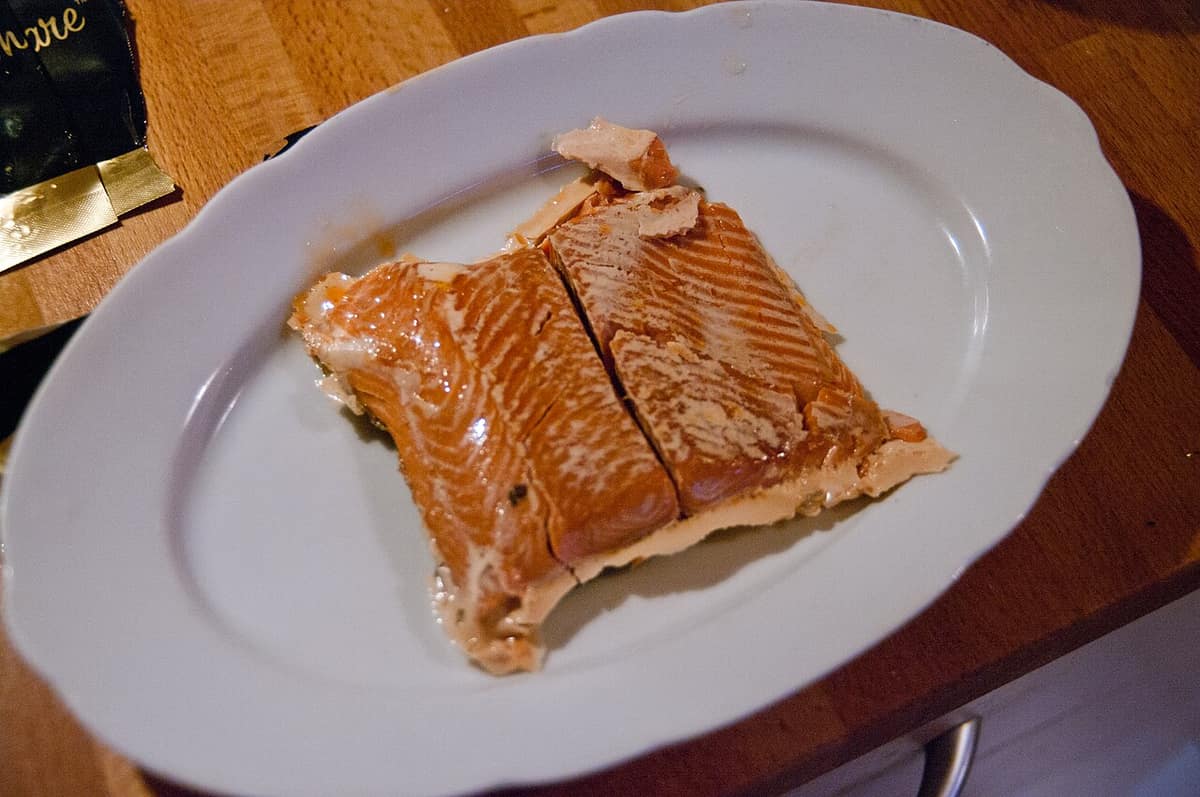
Hardwood-smoked salmon, a Pacific Northwest tradition carried on by local smokehouses — Photo: Dirk Ingo Franke / Wikimedia Commons (CC BY-SA 3.0)
Everyday Dining: Las Margaritas & Farmhouse Cafe
Not every meal in Tillamook is a food destination event. Las Margaritas Mexican Cuisine fills the everyday dining role that Mexican restaurants have come to play in most Oregon communities — consistent, affordable, and locally popular. In a town of roughly 6,000 people, having a reliable everyday restaurant that locals actually use is worth more than it sounds. Las Margaritas is the place you go on a Tuesday when you don't feel like cooking, and the fact that it's busy means it's doing something right.
Farmhouse Cafe offers classic American comfort food in a setting that feels genuinely local — the kind of place where you recognize faces and where the food is straightforward and honest. Both restaurants serve a function that buyers sometimes overlook in their assessment of a small town: the daily food infrastructure that supports real living rather than occasional visiting.
The Schooner Restaurant — A Short Drive to Netarts Bay
About seven miles west of downtown Tillamook, the small bayfront community of Netarts sits alongside one of Oregon's most productive shellfish bays. The Schooner Restaurant on Netarts Bay is worth the short drive for its seafood and its views over the water. The bay itself is a working shellfish operation, and the restaurant's proximity to that source matters for freshness in ways that are immediately apparent.
For Tillamook residents, The Schooner represents the kind of dining that people in oceanside towns take for granted — bayfront seafood with views. The fact that it requires a seven-mile drive rather than a two-block walk is the trade-off of living in an inland agricultural community. Most Tillamook residents consider that trade entirely acceptable.
Tillamook as a Day Trip From Portland
One aspect of Tillamook's food identity that matters for property buyers is its function as a Portland day trip destination. The approximately 90-minute drive from Portland via Highway 6 through the Coast Range makes Tillamook accessible for a Saturday excursion, and the creamery in particular draws consistent Portland traffic year-round. This visitor flow supports the local food economy and keeps small businesses viable in ways that purely residential small towns sometimes struggle with.
It also means that Tillamook's food scene continues to evolve and improve rather than stagnating. A town that attracts a million visitors a year to one facility has a captive market for food entrepreneurship that an equivalently sized town without that draw would not. The Blue Heron operation, the Smokehouse, and the existing restaurant infrastructure all benefit from that visitor economy.
The Takeaway: Living in Tillamook means your grocery store is also a regional food hub. The creamery sells its products on-site; the smokehouse is a short drive; Blue Heron stocks things you'd travel to Portland to find. When the raw material is this good and this close, cooking at home gets more interesting than it ever was in the city.
Thinking about buying in Tillamook? Coastal homes come with their own financing questions — second home or rental, flood insurance, condo eligibility. Phuong Ha, a licensed Oregon loan officer (NMLS #1839449), can help you sort them out before you make an offer.