Tillamook defies easy categorization, and that confuses buyers who approach it with a fixed idea of what an Oregon Coast property should be. It's not a beach town — the ocean is ten miles west. It's not a mountain town — the Coast Range is more forest than peak. It's an agricultural Pacific Northwest valley town with extraordinary access to both coastal headlands and river wilderness, a food identity that draws a million visitors a year, and a community of roughly 6,000 people who largely chose this specific kind of life deliberately. That's a distinct thing, and it deserves an honest description.
This post covers what daily life in Tillamook actually looks like — the trade-offs, the genuine rewards, and the kind of life for which this is the right answer.
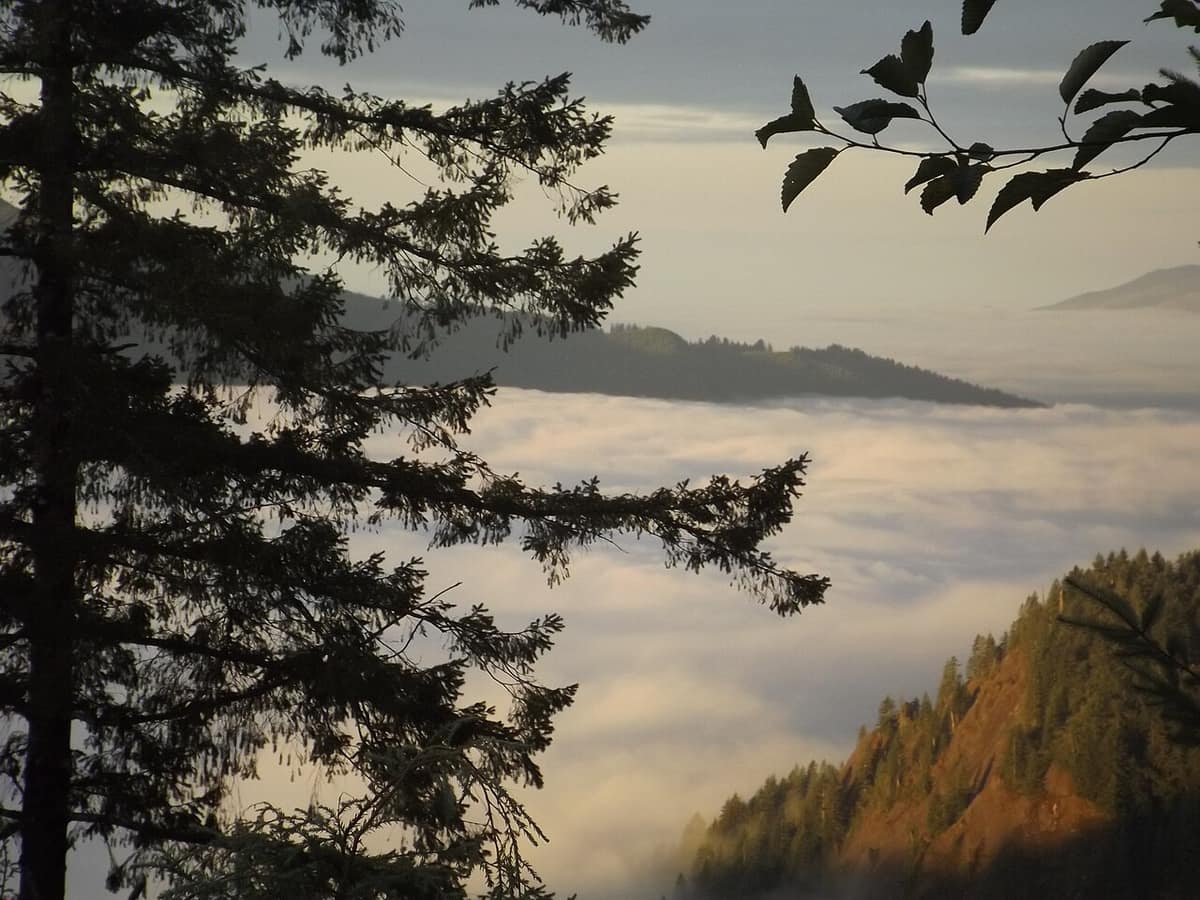
Morning fog settles over the lowlands near Tillamook, seen from the hills along Highway 6 — Photo: J. Passepartout / Wikimedia Commons (CC BY-SA 4.0)
What Daily Life Looks Like
Tillamook functions as a complete small town in ways that many Oregon Coast communities don't. There is a full-service grocery store. There is hardware. There are medical clinics and a full critical-access hospital in Adventist Health Tillamook — something that matters considerably for anyone making a long-term location decision. There are restaurants for everyday meals, including Las Margaritas for Mexican food locals favor, Farmhouse Cafe for classic American comfort food, and the Blue Heron French Cheese Company for more curated food experiences.
What Tillamook doesn't have is the density of restaurant options, specialty retail, or cultural programming that a larger coastal city like Newport offers, and it's worth being honest about that. If your vision of Oregon Coast living involves a robust dining-out schedule, gallery openings, and a lively arts scene within walking distance, Tillamook is not that town. If your vision involves a functional community where you know your neighbors, your outdoor recreation is exceptional, and your property dollar goes meaningfully further, Tillamook earns serious consideration.
The Weather Reality
Tillamook is one of the wettest inhabited places in Oregon, and buyers need to understand this before they commit. The valley sits in a natural funnel that channels Pacific moisture from the ocean through the Coast Range, and the result is annual rainfall that averages 85 inches or more per year. To put that in context: Portland averages about 37 inches annually. Cannon Beach, which most people consider a "rainy" coastal town, averages roughly 65 inches. Tillamook is genuinely wetter.
This is the climate that makes the dairy farms so productive. The valley's lush green year-round character, the fog that sits in the morning and burns off by midday on good days, the persistent moisture that keeps the landscape saturated and deeply green even in summer — these are all expressions of the same weather system that drives buyers away if they're not prepared and that captures the hearts of the buyers who embrace it. Oregon rain culture is a real thing, and Tillamook asks you to mean it.
The practical implication for homeowners is straightforward: moisture management matters. Proper ventilation, vapor barriers, and routine maintenance of roofs and exteriors are not optional considerations in this climate — they're necessary. Buyers coming from drier climates should factor this into their ownership cost expectations.
The Community Character
Tillamook's population is a genuine mix in ways that purpose-built coastal resort towns often aren't. Households whose roots in the county go back generations live alongside newcomers from Portland or further away, remote workers who chose the lower cost basis and outdoor access, and the agricultural and dairy industry workers who form the economic backbone of the county. This is not a resort town crowd. It's not a tech-transplant neighborhood. It's a working Oregon community where people know each other through proximity and shared civic life rather than through curated demographic similarity.
The county fair in August, the 4-H programs in the schools, the farm supply stores on the main street, the Tillamook Creamery as the anchor of local economic identity — these are not aesthetic choices. They are expressions of what the community actually is. Buyers who want that kind of authenticity find it here readily. Buyers who want the aesthetic of small-town Oregon without the agricultural reality often find Tillamook is more literal about it than they expected.
The Commute Reality
The drive between Tillamook and Portland is approximately 90 minutes under normal conditions via Highway 6 through the Coast Range. This is a real commute for partial-year residents and remote workers who make it regularly, but it requires clear-eyed assessment for anyone considering it on a frequent basis. Highway 6 through the mountains can be difficult in winter — snow, ice, and slide debris are occasional factors, and the road is a two-lane highway through significant terrain rather than an interstate. Several times per year, the highway closes temporarily for slides or accidents.
For buyers considering Tillamook as a primary residence with periodic Portland trips, this is a manageable reality that most residents navigate without significant difficulty. For buyers considering a primary residence with daily or near-daily Portland commuting, it's a more serious calculus. Remote work has changed this equation significantly — the buyer profile for Tillamook shifted meaningfully when reliable broadband became available in the valley and remote work became normalized, and the community has absorbed that shift well.
Healthcare and Schools
Adventist Health Tillamook is a critical access hospital that provides emergency services, surgical capabilities, and primary care — a level of healthcare infrastructure that many comparably sized rural Oregon communities lack. For anyone considering long-term primary residence, this matters considerably. The hospital's presence means you're not driving 90 minutes to Portland for routine medical care or in a true emergency.
Tillamook School District serves the community's children through elementary, middle, and high school. Like most rural Oregon districts, it's a smaller operation than what urban buyers may be accustomed to — tighter class sizes, more integrated community involvement, and a high school experience that's genuinely community-embedded rather than anonymous. If you value that character of education, it is a feature rather than a limitation.
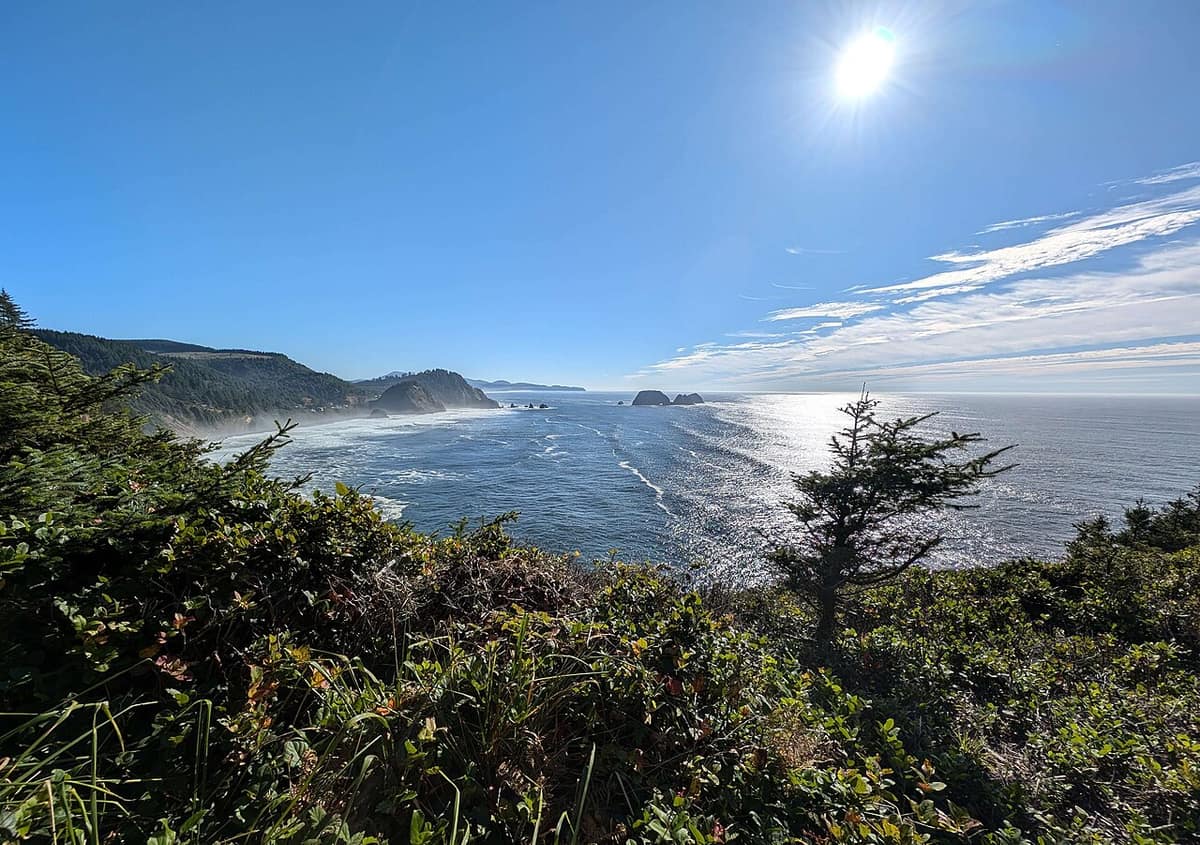
The view from Cape Meares, one of the Three Capes within easy reach of Tillamook — Photo: Quirkipedia / Wikimedia Commons (CC0)
The Outdoor Lifestyle Premium
The outdoor access from Tillamook is the most underappreciated element of life here for people who haven't looked carefully. Cape Lookout State Park — one of the best headland hikes on the entire Oregon Coast — is 25 minutes from downtown. Munson Creek Falls, the tallest waterfall in the Coast Range, is 20 minutes away on a 0.25-mile trail. The Wilson River steelhead fishery begins at the edge of town. The Tillamook State Forest's 364,000 acres of hiking, mountain biking, and hunting land is immediately accessible. Three distinct cape and beach access points — Oceanside, Netarts, Cape Kiwanda — are all within 30 minutes.
For buyers whose primary use of their coastal-adjacent property is outdoor recreation rather than beach lounging or resort-town social life, this is an extraordinary position to be in at Tillamook's price point. You are genuinely in the middle of a recreation zone that people drive from Portland to access on weekends. You live there.
Who Tillamook Is Right For — And Who It Isn't
Fit matters, because the wrong property in the wrong place is a problem for everyone. Here is an honest assessment:
Tillamook is likely right for you if: you want land and space at an accessible price, your primary outdoor recreation involves hiking, fishing, or forest exploration more than beach walking, you genuinely embrace rain and green landscape, you want a functional working community with real agricultural character, and your connection to Portland is part-time or remote rather than daily.
Tillamook is probably not right for you if: you want to step off your porch onto the beach, you need dense restaurant and retail options within easy walking distance, daily Portland commuting is a requirement, or you're primarily looking for an investment property in a tourism-driven rental market. For those profiles, towns like Oceanside, Pacific City, or even Lincoln City are likely better answers.
The buyers who move to Tillamook and are happiest there tend to have thought carefully about what they actually want from Oregon Coast living rather than what they imagine it should look like. The fog in the morning over the valley, the green of the pastures in February, the steelhead in the Wilson in December, the fair in August, the cheese fresh from the creamery — these are the specifics of this particular life. They're not compromises. They're the thing itself.
The Takeaway: The most satisfied Tillamook buyers tend to be the ones who arrive with a clear-eyed picture of the trade-offs and choose them deliberately. This is not a consolation prize for people who couldn't afford Cannon Beach. It's a specific and genuinely excellent way to live in Oregon — one that happens to cost less than the oceanside alternative. Talk financing with Phuong →
Thinking about buying in Tillamook? Coastal homes come with their own financing questions — second home or rental, flood insurance, condo eligibility. Phuong Ha, a licensed Oregon loan officer (NMLS #1839449), can help you sort them out before you make an offer.