Most coastal towns have a beach. Depoe Bay has a stage. The town sits on a rocky shore beside the world’s smallest navigable harbor, a few steps from US 101, and when the Pacific is in a mood, the water around it does something you can watch for free from the sidewalk. This guide covers two of the best wave shows on the central coast: the Depoe Bay Spouting Horn in town, and the Devils Punchbowl a short drive south.
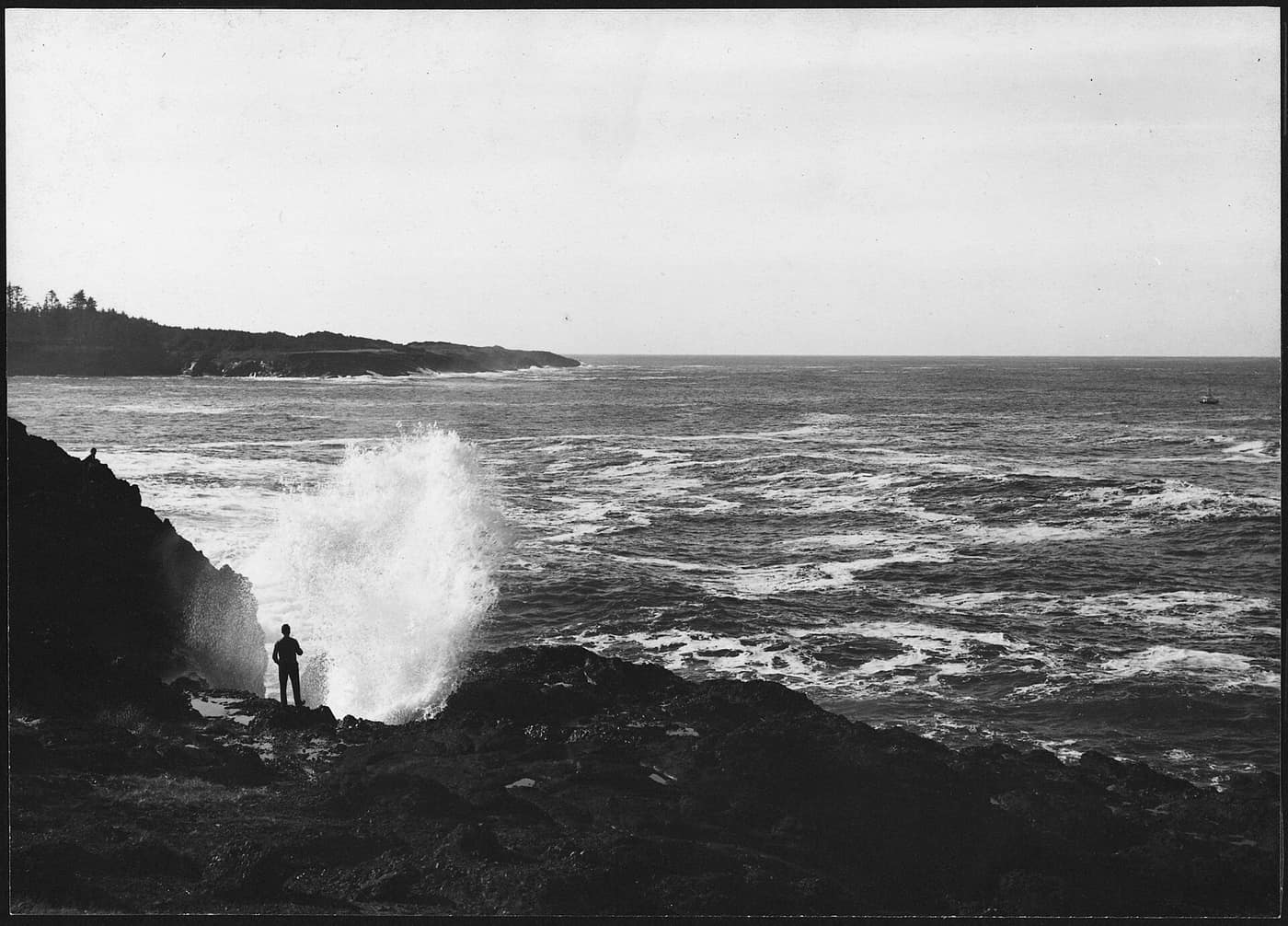
An archival photograph of the Spouting Horn at Depoe Bay — Photo: George A. Grant / Wikimedia Commons (Public domain)
What Is the Spouting Horn in Depoe Bay?
The Spouting Horn is a natural feature in the rocks beside the Depoe Bay seawall. When swell pushes into the rock below, water is forced up and out in a plume of spray. The bigger the surge, the bigger the show, so it tends to be most dramatic when the ocean is rough. It is a quirk of the shoreline rather than a scheduled attraction, which is part of its charm. Nobody can promise you a particular height or hour: on a flat day it does very little, and on a stormy one people stop in the middle of the sidewalk to watch.
The photograph above is an archival image, which gives you a sense of how long this spot has been drawing visitors. The Spouting Horn is best understood as one piece of a wider Depoe Bay experience: the seawall, the harbor channel, and the whale-watching center perched on the wall. The state parks page for the Whale Watching Center describes it as sitting on a seawall with expansive ocean views and a large viewing deck.
When Is the Wave Show at Its Best?
Big swell and storms bring the best action, which on this coast means the cooler months. High tides matter too: the Oregon Department of Transportation photographed higher-than-usual tides sending spray onto US 101 at Depoe Bay (our header photo). That is a reminder that this is a living shoreline and that the road runs close to it. Check TripCheck for conditions, and the National Weather Service Portland office for the forecast.
If you are visiting for the first time, pair the Spouting Horn with the town itself. Our whale-watching guide covers the migration seasons and the resident whales, and in winter the two attractions can share one outing.
The Seawall, the Harbor, and the Whale Watching Center
The Spouting Horn is easier to appreciate with the rest of the waterfront around it. The seawall runs along the edge of town, with the harbor channel beside it, and the state’s Whale Watching Center sits on the wall with its large viewing deck. Because the viewing deck faces open ocean, it is a useful stop for scanning for whales as well as waves. Confirm the center’s current hours and any seasonal changes on the state parks page, since we do not publish them.
Two other spots are worth knowing about north and south of town. Boiler Bay State Scenic Viewpoint and Rocky Creek State Scenic Viewpoint both give elevated views of the same rugged shoreline, and both are covered in our whale-watching guide.
The Devils Punchbowl at Otter Rock
A short drive south of Depoe Bay, at Otter Rock, you will find the Devils Punchbowl State Natural Area. The state parks page describes it as a hollow rock formation shaped like a huge punch bowl, probably created when the roof over two sea caves collapsed and was then shaped by wave action.
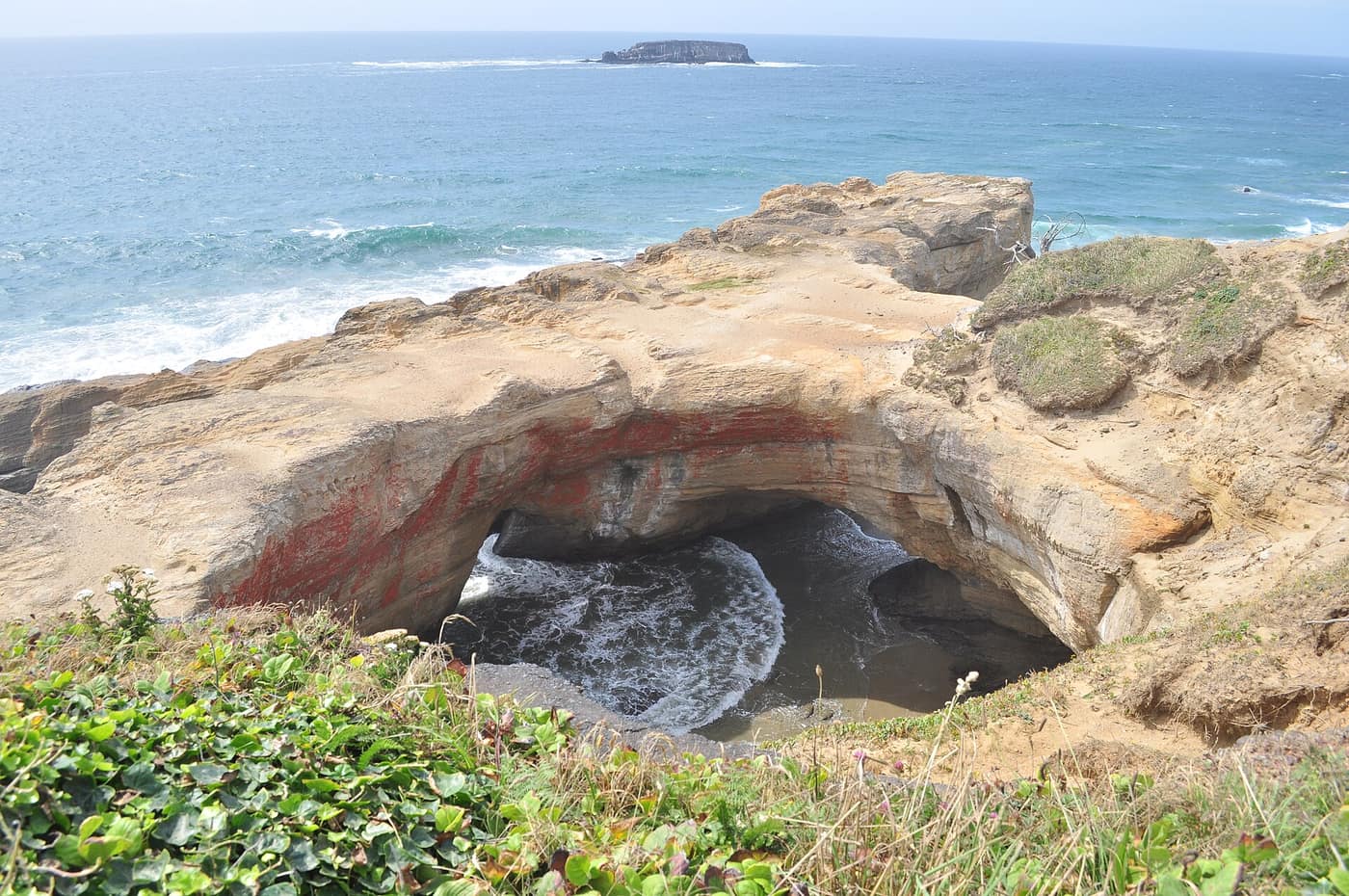
Looking into the Devils Punchbowl at Otter Rock — Photo: Joe Mabel / Wikimedia Commons (CC BY-SA 3.0)
The state parks page says that during winter storms, ocean water slams with a thundering roar into the formation, and the surf churns and foams. It is a draw for surfers and surf watchers alike, and it is also described as a popular whale watching site. Visitors are encouraged to explore the tide pools on the north side of the punchbowl.
Plan around the practicalities. Parking near the park is limited, and the park asks visitors to respect the private property that surrounds it. Confirm current rules, any permit requirements, and facility closures on the state parks page before you go, since we do not list those details here.
How Do You Watch Safely?
Treat any place where waves hit rock with respect. Stay on the viewing areas and behind any barriers, keep a safe distance from the water’s edge, and do not turn your back on the ocean. Large waves, high tides, and slick rock are a poor mix, and the coast has surprises. The archival photo above shows a visitor standing very close to the spray; that is not an example to follow. The advice Lincoln City’s travel guide gives for its beaches holds here too: when it gets powerful, watch from where you are safe. Our Lincoln City storm-watching guide has more on how the winter season works.
A Simple Way to Plan the Day
Start in Depoe Bay, where the seawall and the Spouting Horn are within walking distance of each other. Warm up with a look from the Whale Watching Center deck, then drive south to Otter Rock and the Devils Punchbowl. If the tide is low, the tide pools on the punchbowl’s north side are worth the stop. Finish with the town’s own pace: the harbor, the shops along the highway, and, if you like, a look at the Fleet of Flowers tradition that the town holds each year.
What the Wave Show Means for Life in Depoe Bay
Depoe Bay is a small town built around its harbor, and the wave show is part of the backdrop. If you are thinking about living here, spend a stormy day on the seawall and a calm one on the water, and see which version you like better. Our Living in Depoe Bay guide covers the town’s rhythm, and the Depoe Bay deep dive covers the practical checks before an offer: exposure to weather, tsunami zones, services, and getting around.
Related reading
- Depoe Bay Town Guide
- Living in Depoe Bay: A Deep Dive
- Whale Watching in Depoe Bay
- Living in Depoe Bay, Oregon
Previously on the blog: Lincoln City Weather and Storm-Watching Season
Next up: Yaquina Head: Newport’s Lighthouse and Tide Pools →
Live Where the Waves Put on the Show
If a seawall, a tiny harbor, and a front-row seat to the Pacific sound like home, talk through financing a Depoe Bay home with Phuong.
Get Pre-Approved Talk Financing With Phuong