Florence, Oregon weather is the kind you really learn by living through a full year of it. The town sits where the Siuslaw River meets the Pacific, with the Oregon Dunes National Recreation Area stretching south and freshwater lakes tucked into the forest behind the sand. River, dune, forest and open ocean all in one place means the sky can change character more than once before lunch.
This guide walks through the seasons in plain terms. Where exact figures matter, we point you to the official sources so you can pull the numbers yourself rather than trust a brochure, including NOAA’s U.S. Climate Normals and the Western Regional Climate Center’s Oregon climate summaries.
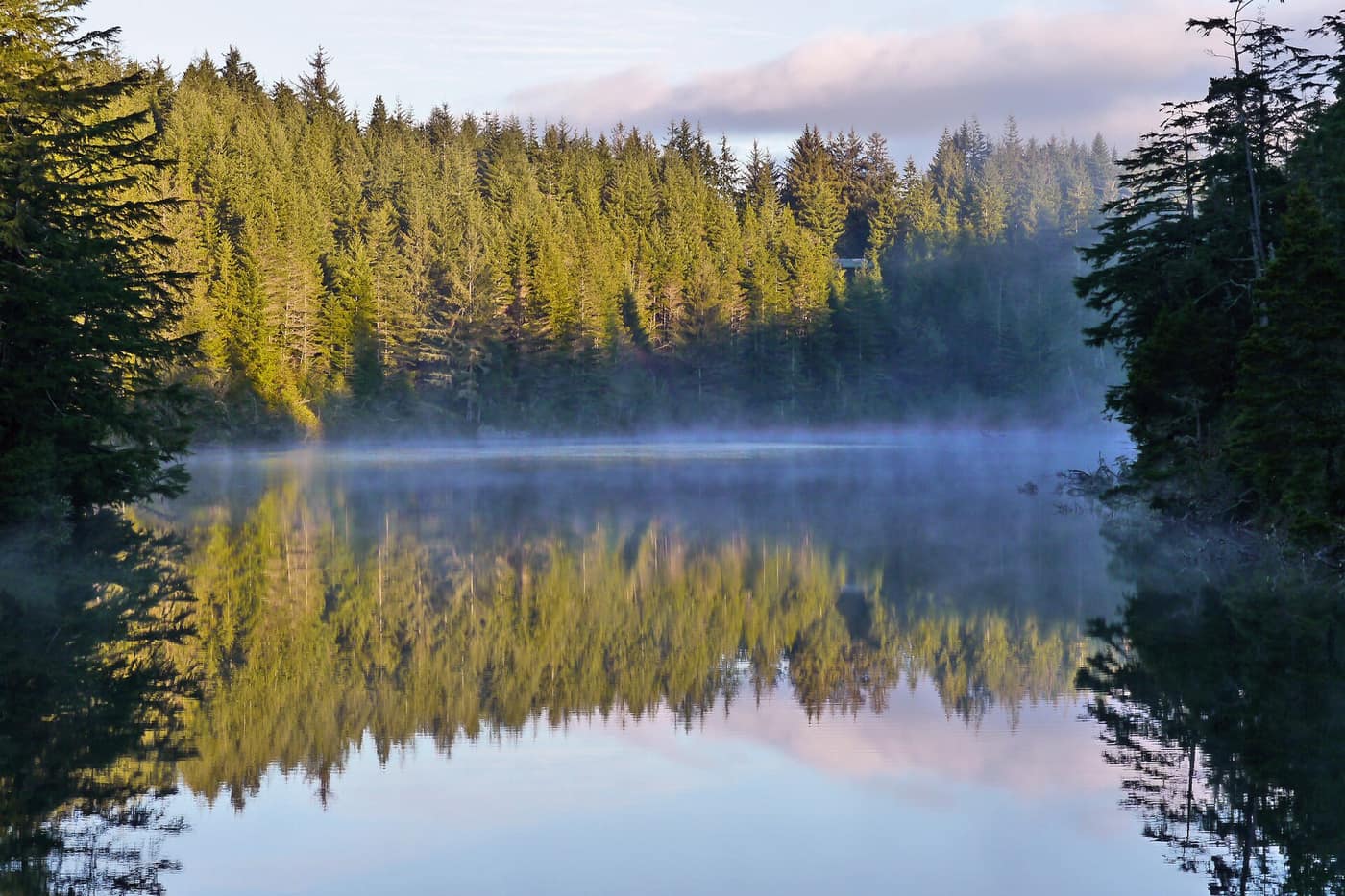
Morning mist lifts off Woahink Lake, one of the freshwater lakes south of Florence — Photo: RickObst / Wikimedia Commons (CC BY-SA 4.0)
What Is the Weather Like in Florence, Oregon?
Florence has a maritime coastal climate: mild temperatures through the year, a wet winter, and a drier summer. Oregon State University’s climate summary for the Oregon coastal zone describes that same pattern for the coast as a whole. The Pacific acts like a thermostat, which is why the town rarely swings to the extremes you see inland, and why snow at sea level is the exception, not the rule.
The flip side of that mildness is moisture. Cloud, drizzle and mist are part of the character here, and the green you see in every photograph is the direct result.
A coastal town is not one climate. The beachfront, the river side around Old Town, and the lake country east of the dunes can each feel a little different on the same afternoon, so judge a neighborhood by standing in it rather than by a single town-wide average. If you are choosing between streets, visit at different times of day and notice where the wind hits and where it does not.
Florence is also a place where the outdoors and the weather are tied together. People come for the dunes, the river and the lakes, and the season decides which of those is at its best. The weather here is less something to endure than something that sets the schedule.
Winter in Florence: Wet, Windy, and Dramatic
Winter is the wet season. Rain is the main event, and strong winds tend to arrive ahead of winter storms. Between systems, the coast often gives you clean, bright, rinsed-looking days, which is why longtime residents talk about winter with more affection than visitors expect.
If you drive, check road and weather conditions before you go, especially on Highway 126 toward Eugene and along US 101. Oregon’s official TripCheck is the place to look.
Winter is also the best argument for knowing your hazards. Wet-season storms are one thing; other coastal risks are another, and a thoughtful buyer learns both. The National Weather Service explains how to read tsunami alerts from the National Weather Service, and Lane County publishes an Emergency Management page for the area. Our Florence deep dive pulls those resources together with utilities and getting around.
One practical habit for any coast winter: keep your car stocked and your phone charged, and treat a stormy forecast as a reason to adjust plans rather than a challenge. Daylight and tide times shift in the dark months, so give yourself some slack.
Spring and Fall: The Shoulder Seasons
Spring is a gradual turn: showers mixed with brighter spells, new growth everywhere, and the town’s rhododendrons building toward the Rhododendron Festival each May. Our Rhododendron Festival guide shows how the community treats that season.
Fall is the coast shifting back toward its wet-season pattern. Summer light fades, the first storms of the season can appear, and the dune forests and lakes take on a quieter mood. Expect variety rather than a single predictable weather type.
Many people who are seriously considering a move find that the shoulder seasons give the clearest read of a town. Spring and fall are neither a summer postcard nor the deepest part of winter, so they show you what ordinary days feel like: how the light falls, how often you want a jacket, and whether the pace of town suits you.
If your schedule allows only one visit, a stretch in one of these seasons, ideally with a rainy day included, is a fair test. A town you still like on a gray midweek morning is a town you will probably like in general.
Summer in Florence: Drier, With Fog on the Edges
Summer is the drier season, and the long days are when the dunes, river and lakes get the most use. Fog is part of the coastal year, though, and it can linger over the water in the morning before the sky opens up. A light layer is a sensible companion even on a warm afternoon.
The lake side of Florence is a good summer counterweight to the ocean side. Jessie M. Honeyman Memorial State Park sits among the dunes and lakes south of town; check current hours, fees and campground availability with Oregon State Parks before you plan around it.
If you are picturing a hot summer, adjust the picture. The ocean keeps the coast cooler than inland Oregon, and a foggy start near the water is part of the pattern. The lakes are a useful counterweight to the ocean side, so it can be worth saving them for when the air has warmed. For the dune recreation area itself, the Siuslaw National Forest is the manager, so check its page for current conditions, closures and rules before you head out.
Wind and Sand: The Detail Specific to Florence
Because Florence sits beside a large active dune system, wind does something here it does not do in most coastal towns: it moves sand. If a property borders the dunes or public land, ask the seller and a surveyor about boundaries and about wind-blown sand. The Siuslaw National Forest manages the Oregon Dunes National Recreation Area, and our dune-edge buyer guide goes deeper on what to ask.
For the weather itself, use the National Weather Service forecast for your exact location, and pull the long-term averages from the climate sources above. A first winter is the best test of any coastal home, so if you are weighing a move, try to see Florence in more than one season.
Seasonal weather also shapes upkeep. Salt air, moisture and wind-blown sand are all part of owning near the coast, and each is worth raising with an inspector and with neighbors who have been through a few winters. We are not offering building advice here, only suggesting that weather is a legitimate question to ask about any property.
Last, remember that the numbers are one input and your own comfort is the other. Visit, walk the beach, sit in a cafe on a rainy morning, and then decide whether this is the sky you want over your daily routine.
Related reading
- Florence Town Guide
- Florence Deep Dive: Utilities, Hazards, and Getting Around
- Living Next to the Oregon Dunes
- Florence Rhododendron Festival
Previously on the blog: Depoe Bay Weather and Winter Storm Watching
Next up: Coos Bay Weather: Fog, Wind, and Mild Winters →
Could You Live With This Sky?
Spend one gray winter morning and one bright summer afternoon in Florence and you will know. When you are ready to talk about financing a home on the central coast, Phuong is happy to walk you through it.
Get Pre-Approved Talk Financing With Phuong