Bandon is famous for its sea stacks, but the quiet secret of the shoreline sits at your feet. Tide pooling in Bandon means timing a visit for low tide, walking out among the rocks near Face Rock, and finding a miniature world of sea stars, anemones, and kelp in the places the ocean has left behind. A short stretch of coast, a tide table, and a little patience is all it takes.
How Do You Go Tide Pooling in Bandon?
Start with the tide, not the weather. Face Rock State Scenic Viewpoint describes rocky intertidal areas to explore at low tide, which is when the pools are exposed. Pull up a tide table before you go: NOAA Tides & Currents publishes predictions, and Oregon State Parks links a South Coast tide tables brochure from the Face Rock page.
Then plan your exit as carefully as your arrival. Oregon State Parks warns that incoming tides can strand people, especially while exploring tide pools, and that sneaker waves are unpredictable and can knock adults off their feet. Read the beach safety guidance before you go, keep your eye on the ocean, and do not turn your back on it.
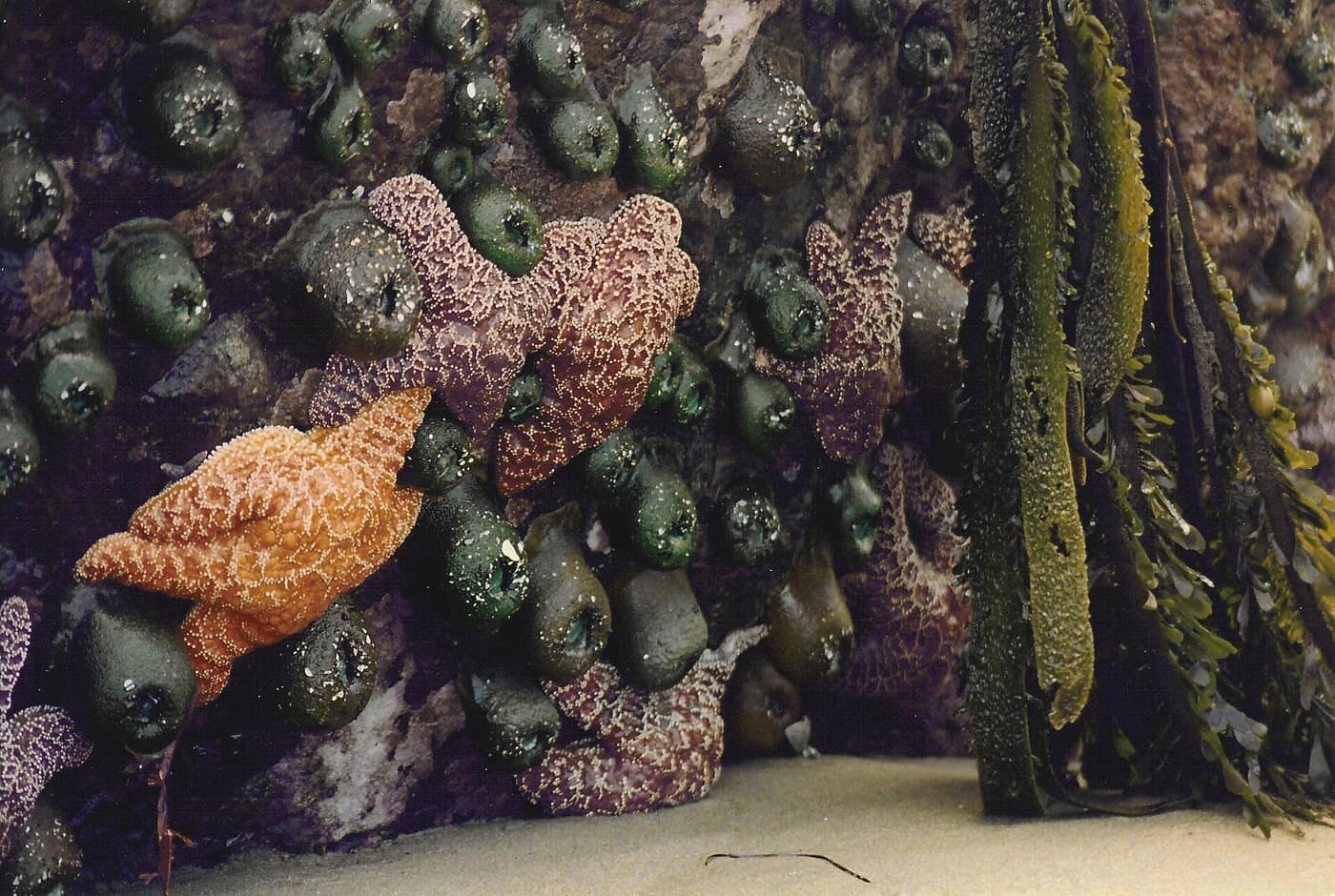
Sea stars, anemones, and kelp exposed at low tide in Bandon — Photo: Joe Mabel / Wikimedia Commons (CC BY-SA 3.0)
Face Rock Viewpoint: Your Way Down to the Beach
Face Rock is the best-known landmark in Bandon. From the cliff, the state parks page says, you can easily pick out the face on Face Rock, and the park notes an American Indian legend about the spot, with a woman’s voice said to be heard on the wind. A well-kept trail leads from the viewpoint to the beach. Our Old Town Bandon guide describes how close the viewpoint sits to the center of town, which is part of what makes this beach feel like a neighborhood amenity.
The viewpoint also carries a quiet message about manners. The rocks and tidal flats here are part of the Oregon Islands National Wildlife Refuge because they provide important nesting habitat for birds. And if you see a harbor seal pup alone on the beach, state parks says pups are often found there, are usually not stranded, and should not be disturbed. Keep your distance and give the animal room.
Coquille Point and the Refuge Offshore
Just north of Face Rock, Coquille Point is the mainland unit of the Oregon Islands National Wildlife Refuge, and, as our Bandon town guide describes it, a paved trail along the bluff overlooks the offshore seabird-nesting rocks.
The numbers behind the refuge are worth knowing. According to the US Fish and Wildlife Service, the refuge includes 1,853 rocks, reefs, and islands along the Oregon coast and was established on May 6, 1935, as a refuge and breeding ground for seabirds and marine mammals. Most of Oregon’s estimated 1.2 million nesting seabirds use it to raise their young, and seals and sea lions haul out on the islands to rest and give birth. The agency’s own advice is to plan on taking the long view, which means binoculars or a spotting scope, because most of the refuge lies offshore.
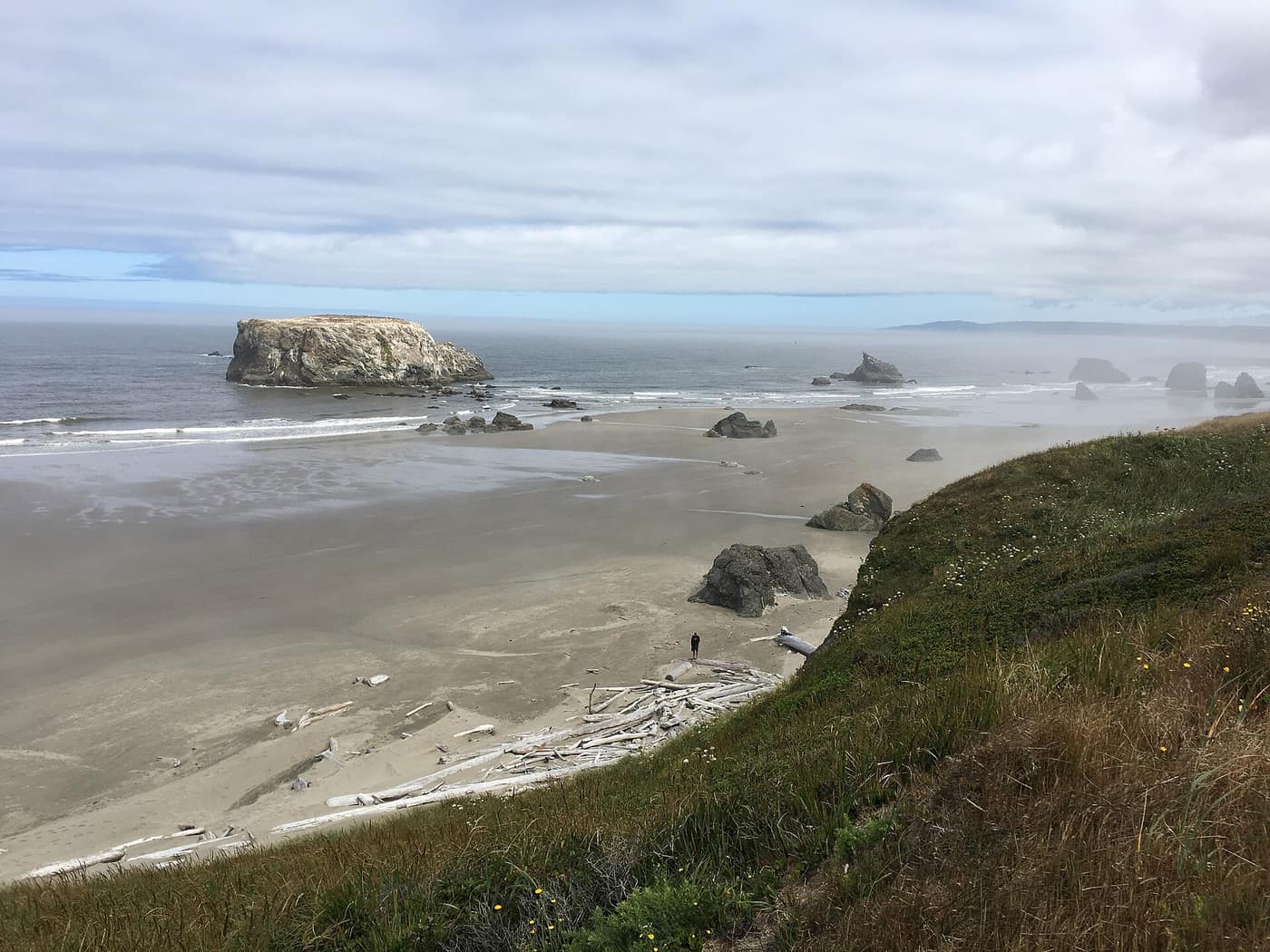
Sea stacks and low-tide sand seen from the bluff at Coquille Point in Bandon — Photo: USFWS Pacific / Wikimedia Commons (Public domain)
What Lives in a Bandon Tide Pool?
The photograph above shows the typical cast: ochre and purple sea stars clinging to a wall of rock, green anemones with their tentacles drawn in, and kelp hanging beside them. These animals are built for a life that swings between ocean and air. At high tide they are underwater. At low tide they hold on, close up, and wait. That is why they look so still, and why it is so easy to harm them without meaning to. Prying a sea star off a rock or poking an anemone is not a harmless bit of curiosity. Treat every creature as if it were holding its breath.
Bandon’s shoreline also has the sea stacks that give the beach its postcard look. Our Bandon town guide names the best known of them: Face Rock, Cat & Kittens, Table Rock, and Elephant Rock. A low-tide walk is a good way to see them from the angle the tide usually hides.
The Bigger Refuge Behind the Rocks
It helps to know what you are looking at offshore. According to the US Fish and Wildlife Service, the Oregon Islands refuge runs from Tillamook Head near Seaside south to the California border and is managed by the Oregon Coastal Refuge Complex. All of its rocks and islands are designated National Wilderness Areas, with the exception of the one-acre Tillamook Rock. In other words, the stacks that make Bandon’s skyline are not just scenery. They are working nurseries for seabirds and resting places for seals and sea lions, and that is why the rules about staying off them matter.
Ground Rules for a Good Tide Pool Day
- Look, do not touch: state parks asks tide pool visitors elsewhere on this coast to look without touching, and that is a good rule everywhere.
- Leave the refuge rocks alone: the offshore rocks are protected as wildlife habitat.
- Wear real shoes: wet rock is slippery, and closed-toe shoes with grip are worth the trouble.
- Mind the clock: note when the tide turns and head back before it does.
- Leave it as you found it: take photos, not shells, and put rocks back exactly where they were.
Why Bandon Works for Tide Pool Days
The charm of Bandon is how close everything is. Old Town, the harbor, the viewpoint, and the beach are all part of one small place. A morning low tide is just a morning here, followed by coffee in town. That is part of the lifestyle our Old Town Bandon and Bandon Dunes guides describe, and the Bandon deep dive covers the practical side of living here, including the fog and the wind.
Related reading
Previously on the blog: Cape Arago and Sunset Bay: Coos Bay’s Wild Coastline
Next up: Cape Blanco: Oregon’s Westernmost Lighthouse →
Want low-tide mornings close to home?
Picture Face Rock at low tide on your own morning walk, and talk with Phuong about financing a home in Bandon.
Get Pre-Approved Talk Financing With Phuong