Everyone knows Haystack Rock. South of town, along Highway 101, two smaller state recreation sites reward people who like their beaches with a little more room: Hug Point and Arcadia Beach. Hug Point has a historic road cut into the rock and a seasonal waterfall. Arcadia is a long beach between two headlands. Both come with the same rule, which is why it comes first.
Safety first: check the tide table before you go. Oregon State Parks warns that it is possible to become stranded by the incoming tide when exploring Hug Point, and its advice is “If in doubt, don’t go out!” Tide and sand conditions change with the seasons. Look up that day’s tides on the NOAA Tides & Currents tide predictions page, and know whether the tide is coming in or going out before you walk around a headland.
What Makes Hug Point Special?
Hug Point’s story is a travel story. According to Oregon State Parks, before the highway was built the beach was the only route along this stretch of coast. At low tide you can walk the original stagecoach road north of the parking area, where wheel ruts are still carved into the rock. The point takes its name from the careful hugging of the rocks that travelers needed to get around the headland without getting wet.
A short walk north of the parking area brings you to a seasonal waterfall, and two caves are carved into the sandstone cliffs around the point. The park also lists tide pools that can be reached only at low tide. The site has a parking area, forested picnic areas, a restroom, and a short walkway to the beach. Check the park page for current permit requirements, and note that drones are not allowed, to protect nesting shorebirds.
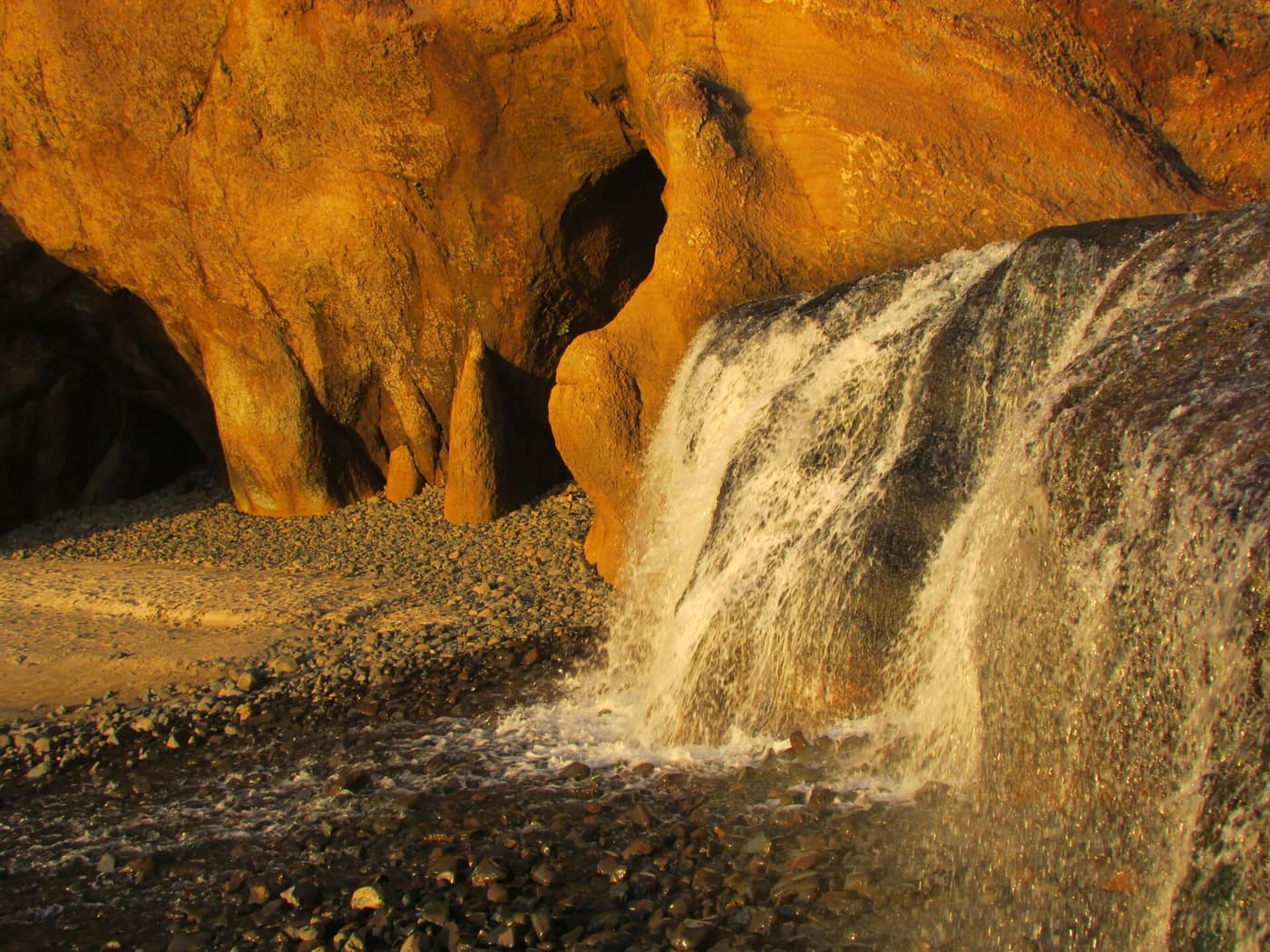
The seasonal waterfall and sandstone caves near Hug Point — Photo: Jeffhollett / Wikimedia Commons (CC BY-SA 4.0)
Is Arcadia Beach Worth the Stop?
Arcadia sits just off the highway south of Cannon Beach. The state describes a shady grove a few feet from the sandy beach below, with a beach that stretches more than a mile between two headlands: Humbug Point, with Lion Rock just offshore, to the north, and Hug Point to the south. There are tide pools at both ends, and the park suggests watching for surfers just offshore.
Here is the part to read twice. The park notes that both headlands can be passed only at low tide. That means a walk from Arcadia toward Hug Point, or the other way, is a tide-dependent trip, not a casual stroll. Know the tide, give yourself a margin, and turn around early rather than late.
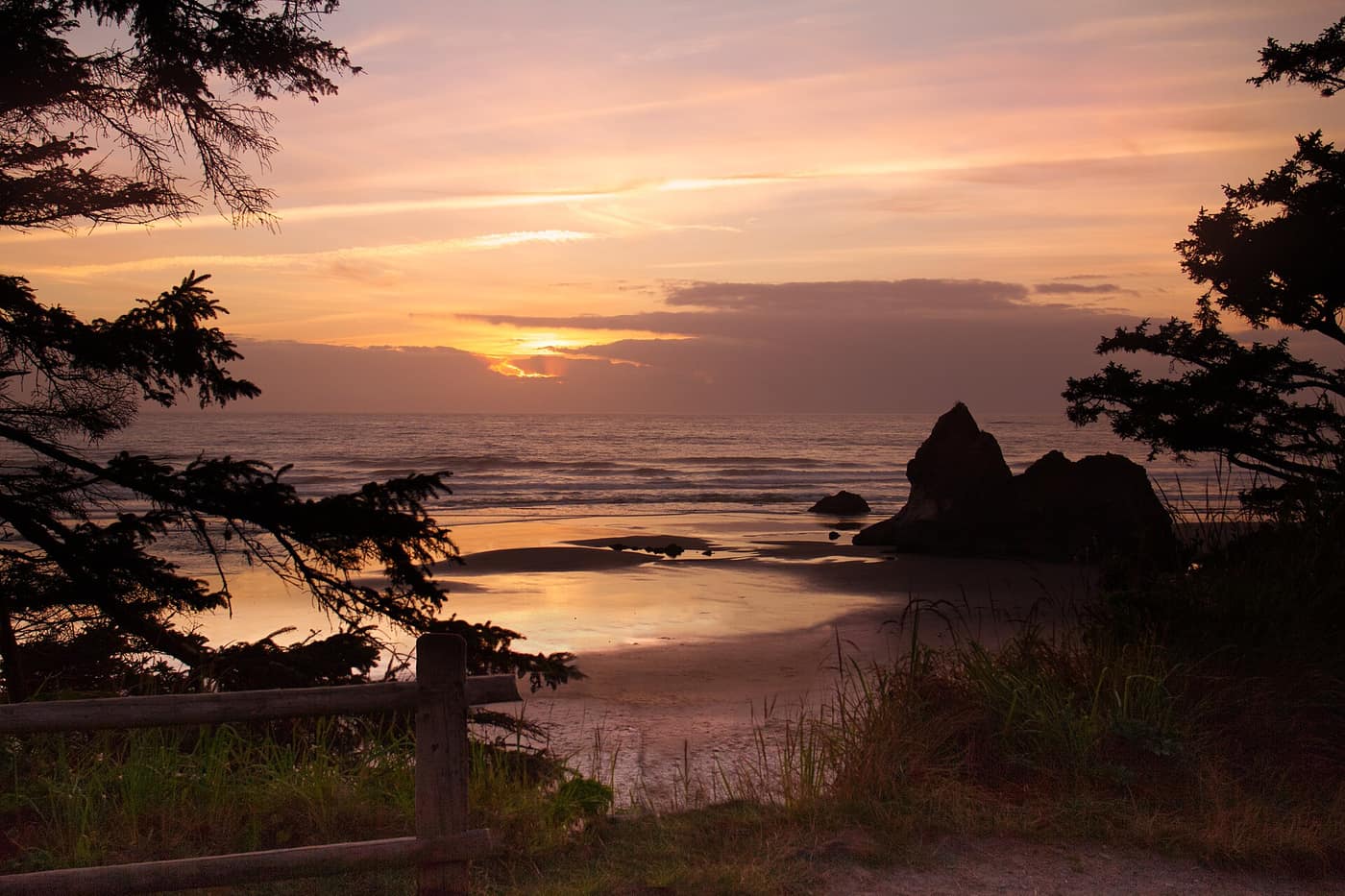
Evening light at Arcadia Beach State Recreation Site — Photo: Bonnie Moreland / Wikimedia Commons (Public domain)
What Does a Safe Low-Tide Visit Look Like?
A simple routine keeps the day enjoyable:
- The night before: look up the next day’s tides and note when low tide falls.
- On arrival: arrive well ahead of low tide so you have time to explore and still turn back early.
- On the sand: keep an eye on the water, not the clock, and watch whether the tide is coming in or going out.
- At the headlands: do not count on rounding a point; if you cannot get back comfortably, turn around.
- Around wildlife: explore tide pools gently, and leave the drone at home, since drones are not allowed at Hug Point.
How Do You Plan Around the Tides?
Start with the tide table, then add the ocean itself. The National Weather Service has guidance on rip currents, and the Oregon Coast Visitors Association’s beach safety guide offers plain advice that applies to every beach here: never turn your back on the ocean, stay off logs in the surf or on wet sand, and assume cliff edges are unstable. Storms and winter swells change how much beach is left at any tide, so a walk that works in July may not in January.
If the sand is already wet near the base of the rocks, treat that as your signal to head back. Neither of these sites sits in the middle of a village, so shelter and help may be farther away than you expect, which is one more reason to plan conservatively.
What Quiet Beaches Mean If You Are Buying Near Cannon Beach
Part of Cannon Beach’s appeal is how quickly the crowds thin out once you leave the village. If you are looking at homes in this area, the same tide-and-terrain awareness belongs in your homework. Our Cannon Beach deep dive explains that the places people think of as Cannon Beach can fall under different governments, so water, sewer, permitting, and rental rules depend on the address, and it points to the state’s evacuation brochures for checking an exact route.
If you are looking outside the village itself, confirm the details for the exact address. Our deep dive notes that Arch Cape is an unincorporated community with its own water and sanitary districts, that the Cannon Beach Rural Fire Protection District lists Cannon Beach, Arch Cape, and Falcon Cove as its service area, and that any property outside city limits needs its water and sewer arrangements confirmed. A home near a beach also deserves questions about drainage, blowing sand, and salt exposure.
For the headland on the north side of town, read our Ecola State Park guide, and for the landmark everyone photographs, see Haystack Rock.
Related reading
- Cannon Beach Town Guide
- Living in Cannon Beach: A Deep Dive
- Ecola State Park: Cannon Beach’s Wild Headland
- Haystack Rock
- The Stormy Weather Arts Festival
Previously on the blog: Hiking Tillamook Head from Seaside
Next up: Newport, Oregon Weather by Season →
A Quiet Beach Walk, Close to Home
If a low-tide walk to a waterfall sounds like your kind of Saturday, let’s talk through financing a Cannon Beach-area home with Phuong.
Get Pre-Approved Talk Financing With Phuong