Tillamook weather explains the landscape. The city sits in a river valley between the Coast Range and the tidal flats of Tillamook Bay, and the green hills around it are what a wet, mild coastal climate looks like when it is left to grow grass. If you are comparing Tillamook with the beach towns to its north and south, or wondering what January here is really like, this is the season-by-season picture.
One note on method. We are deliberately not quoting temperature or rainfall numbers. Those belong to official records, so for the figures, use the National Weather Service Portland office, the Western Regional Climate Center, and the NOAA climate normals. What follows is the character of each season and the practical things worth knowing.
What Is Tillamook Weather Like Through the Year?
Tillamook has a maritime coastal climate: mild temperatures through the year, a wet winter, and a drier summer. Oregon State University’s climate summary for Oregon’s coastal zone describes that pattern for the coast, and it is the one you will see here. Fog is part of the coastal year, and strong winds tend to arrive ahead of winter storms.
Tillamook sits beside the bay rather than on the open beach, so the weather on Main Street and the weather on the Three Capes loop west of town can differ on the same afternoon. When in doubt, check a coastal forecast rather than a Portland one. The National Weather Service Portland office covers the northern Oregon coast.
When Is the Rainy Season in Tillamook?
Winter is the wet season. Rain feeds the rivers that cross the valley, which is why flood maps matter here as much as tsunami maps. The wet months are also a large part of why the valley looks the way it does: pastures stay green, fog lingers over the lowlands, and the hills hold cloud well into the morning.
Living through it is mostly a matter of rhythm. Storms tend to come in a series with quiet stretches between them, and a clear, cold, bright day can turn up in the middle of winter. If you commute or visit over Highway 6 from the Portland area, check TripCheck before you drive, especially in winter weather.
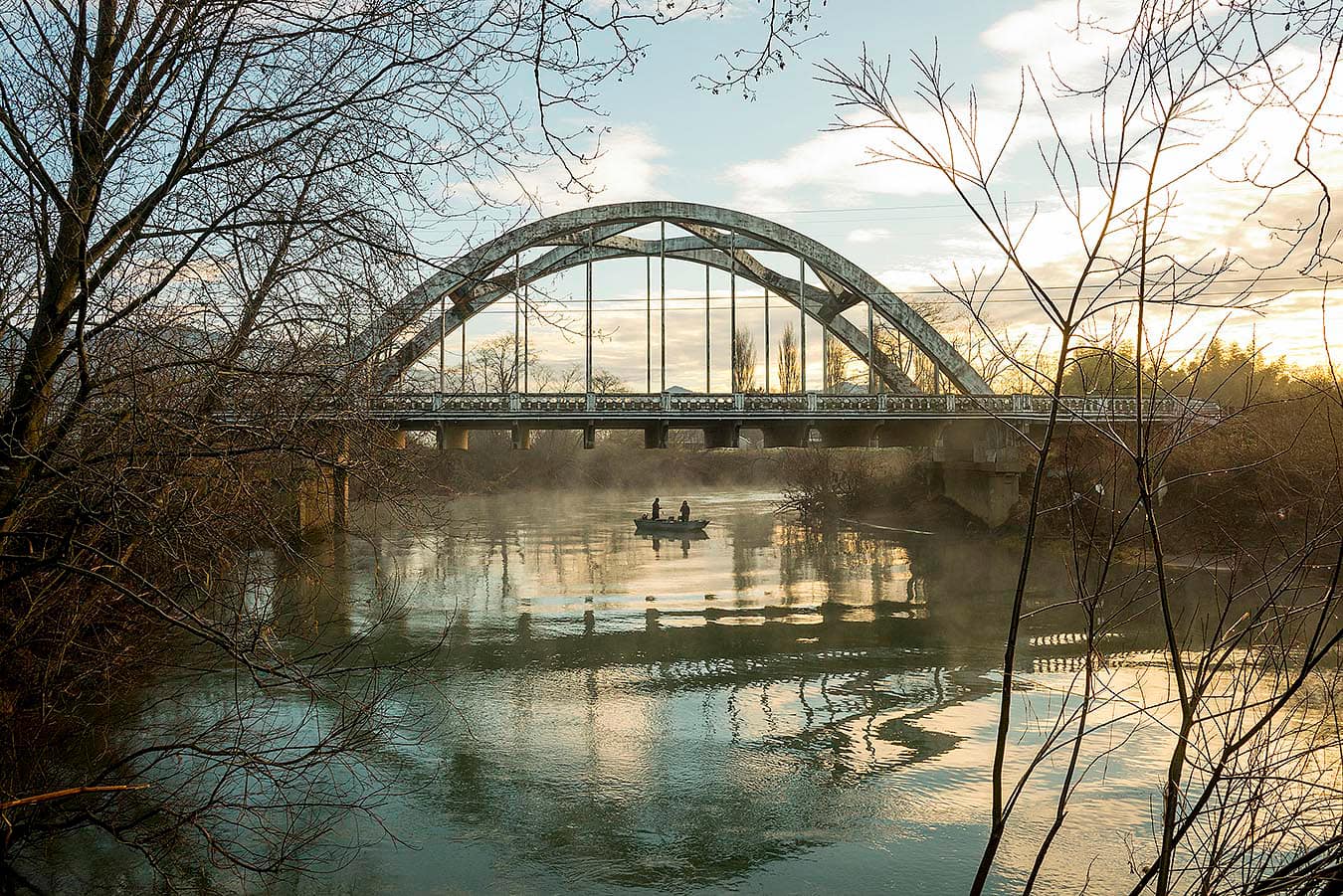
The Wilson River Bridge near Tillamook — the rivers that cross the valley are what winter rain feeds — Photo: Oregon Department of Transportation / Wikimedia Commons (CC BY 2.0)
Spring and Summer: Is Tillamook Sunny?
Spring is a mix: a bright morning, a shower by lunch, and a clear evening, sometimes all in one day. Summer is the drier season, and it is when the valley shows itself off. The Three Capes headlands are at their most welcoming, and our guide to the Tillamook County Fair shows the valley in its summer season.
Does it stay foggy? Often, at least in the morning. Fog can sit over the bay and the coast while sunshine reaches parts of the valley, and the capes west of town can be in cloud when the town is not. If you are planning a drive on the Three Capes Scenic Route, look at the day’s forecast first and keep the plan flexible.
Fall: When the Valley Settles In
Fall tends to be quieter. The summer visitors thin out, the light turns low and golden over the pasture, and the first real storms of the season can begin to appear late in the year. If you want to know what Tillamook feels like when it is simply a working county seat, fall is a good time to walk around and see how the town lives.
How Do Locals Plan Around the Weather?
Layers are the local answer to nearly everything: a waterproof shell, something warm underneath, and shoes that can get wet. Most residents treat weather as a variable to plan around, not a reason to stay home. The town guide lists the Tillamook Creamery and the Blue Heron French Cheese Company among the places to land on a wet day, and it describes Oceanside and Netarts as small communities on the coast west of town, where a beach walk can feel quite different from a day in the valley. Check current hours and fees with each venue before you go.
What Tillamook Weather Means If You Are Thinking of Buying
Weather shapes ownership more than most buyers expect, and in a river valley the questions are specific. A few are worth asking about any address, because they change from lot to lot:
- Flood history. Look up the address in the FEMA Flood Map Service Center and read the county’s Flooding page. Ask the seller about past water on the property and on the access road.
- Wells and septic. Homes outside city limits may have a private well and septic system rather than city water and sewer. Ask how each has fared in a wet winter.
- Access when roads are wet. On rural land, ask who maintains the road and what it is like after a long stretch of rain.
- Low bayside lots. Check flood and tsunami mapping closely for waterfront and low-lying parcels near the bay.
Ask an insurance agent early what a specific address would require and what a policy would and would not cover, including flood and earthquake, because coverage choices change the cost of owning the home. None of this should scare anyone off. It is simply the homework a valley address asks for, and it is easier to do before you fall for the view. Our Tillamook deep dive goes further into utilities, hazards, and the questions to ask before an offer, and living in Tillamook gives a candid look at the day-to-day.
Related reading
- Tillamook Town Guide
- Living in Tillamook: A Deep Dive
- Driving the Three Capes Scenic Route from Tillamook
- Living in Tillamook
- The Tillamook County Fair
Previously on the blog: The Samuel H. Boardman Scenic Corridor Near Brookings
Next up: Hiking Tillamook Head from Seaside →
Prefer Green Valley Mornings to a Beach Crowd?
If misty fields and a bay on the horizon sound like home, let’s talk through financing a Tillamook property with Phuong.
Get Pre-Approved Talk Financing With Phuong