Gold Beach weather is a story about a river meeting an ocean. The town sits at the mouth of the Rogue River on Oregon’s far southern coast, and the Pacific writes the calendar: a wet, stormy winter, a drier summer, and fog that can show up whenever the marine layer decides to. That is the broad pattern. This post walks through it season by season, and it sticks to what can be sourced rather than inventing a statistic for each month.
Gold Beach Weather: How the Pacific Sets the Calendar
Oregon State University’s Oregon Climate Service describes the coastal zone as characterized by wet winters, relatively dry summers, and mild temperatures throughout the year, in its climate summary for Oregon’s coastal zone. The heavy precipitation results from moist air masses moving off the Pacific onto land, especially in winter. The same summary says the highest monthly precipitation along the coast usually falls in November, December, and January.
We are deliberately not quoting inches or degrees for Gold Beach itself. Specific local normals belong with the National Weather Service and NOAA, and you can find the current official forecast and climate information from the NWS Medford office, which covers Curry County.
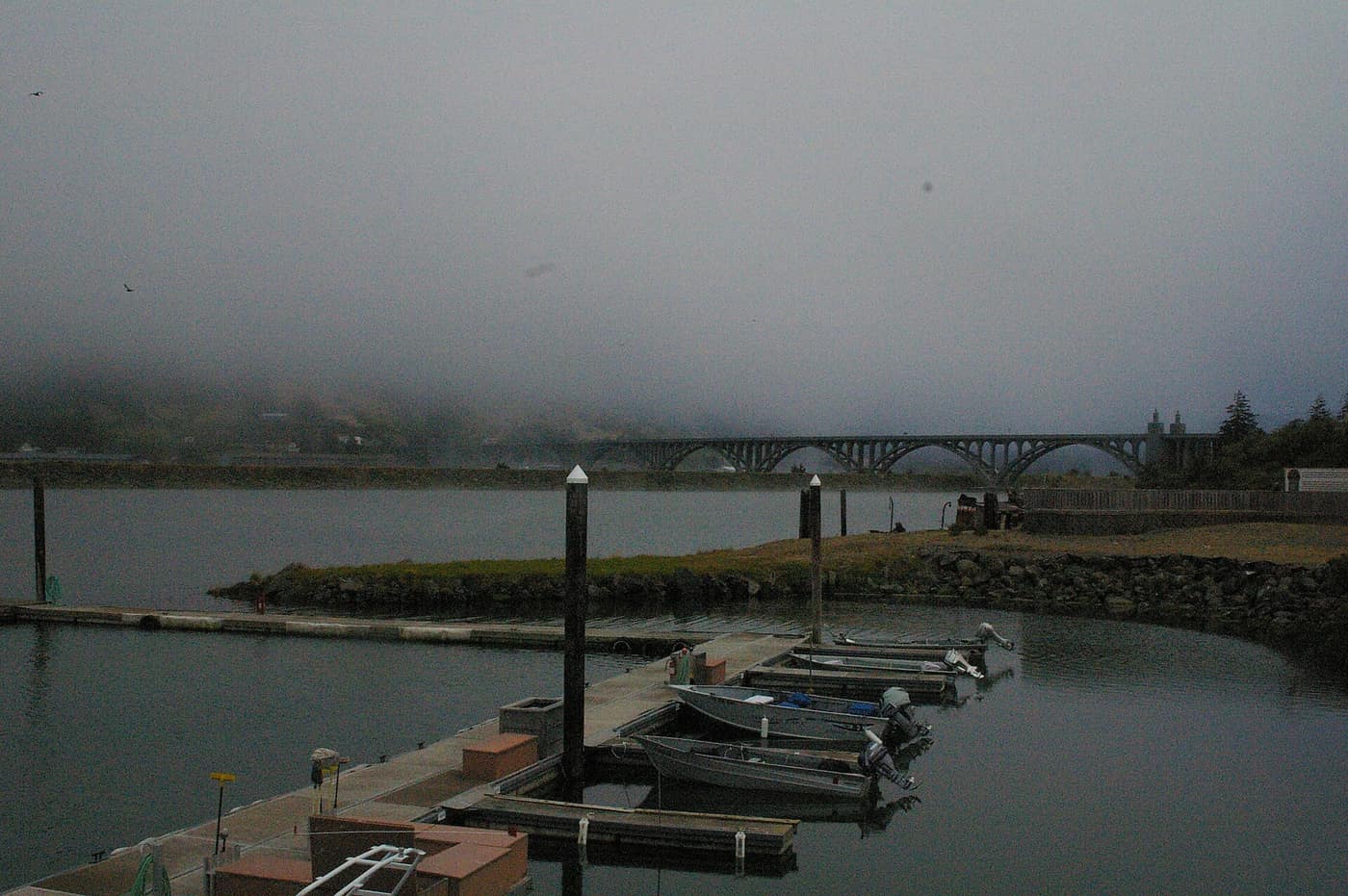
Fog over the Rogue River and the Isaac Lee Patterson Bridge at Gold Beach — Photo: Ned Wilson / Wikimedia Commons (CC BY-SA 4.0)
Winter: Wet, Windy, and Dramatic
Winter is the wet season. The Oregon Climate Service notes that occasional strong winds strike the coast, usually in advance of winter storms, that such events are typically short-lived, and that damage is most likely at exposed locations. Skies are likely to be cloudy through winter. Snowfall near the coast is minimal, according to the same summary, and freezing temperatures are infrequent.
For the person living here, that means a season of rain, wind, and big surf, punctuated by clear days that feel earned. Check conditions before you drive with TripCheck, and know the tsunami alert basics that every coastal resident should.
Spring and Fall: The In-Between Seasons
Spring and fall are transition seasons, which is another way of saying they are less predictable. The pattern generally moves between the wet winter and the drier summer, so you can see storms, sunshine, and fog in the same week. We do not have a primary source that pins down specifics for these shoulder seasons in Gold Beach, so rather than guess, we suggest visiting in each one before you decide. The coastal forecast can swing quickly.
Summer: Drier, With Fog in the Mix
The Oregon Climate Service describes summer as relatively dry, with skies that are only partly cloudy, and notes that summer cloud cover is due mostly to fog and low clouds. In other words, a dry summer on this coast is not always a sunny one. Fog can sit over the river mouth and clear later, or it can linger, and the Rogue River Bridge photo above shows what that looks like. Plan for layers even in July, and look at the forecast the day you go.
A Season-by-Season Cheat Sheet
Everything below comes from the sources above, so treat it as a pattern and not a promise:
| Season | Pattern | Worth Packing |
|---|---|---|
| Winter | Wet, cloudy, storms off the Pacific | Rain shell, waterproof shoes |
| Spring | Transitional and changeable | Layers |
| Summer | Relatively dry, fog and low clouds | A light jacket, even in July |
| Fall | Transitional and changeable | Layers, a rain shell |
Winter and summer patterns: Oregon Climate Service, coastal zone summary. Spring and fall are described as transitions, not measured.
One more winter fact from the same summary is worth knowing. Several days of abundant rainfall can cause strong flood events, and in some places flood-control dams have reduced the damage. Gold Beach sits where a major river reaches the sea, so ask about flood and drainage conditions when you look at a specific property, and check the maps and guidance from your local officials.
Is Gold Beach Warmer Than the Rest of the Coast?
Here is where the south coast gets interesting. A National Weather Service technical memo describes the “Brookings Effect”: when strong offshore, downslope flow erodes the low marine layer, temperatures at Brookings can be sharply warmer than neighboring coastal communities, including Gold Beach. The memo says the effect can occur any time of the year and rarely lasts more than two days in a row.
That tells you something useful about Gold Beach: the memo treats it as one of the neighbors that can stay much cooler while Brookings heats up. We cover the south coast’s warmer pocket in our Banana Belt guide, and if you are choosing between the two towns, spend a few days in each. Gold Beach offers a river, a harbor, and a mild maritime climate on its own terms.
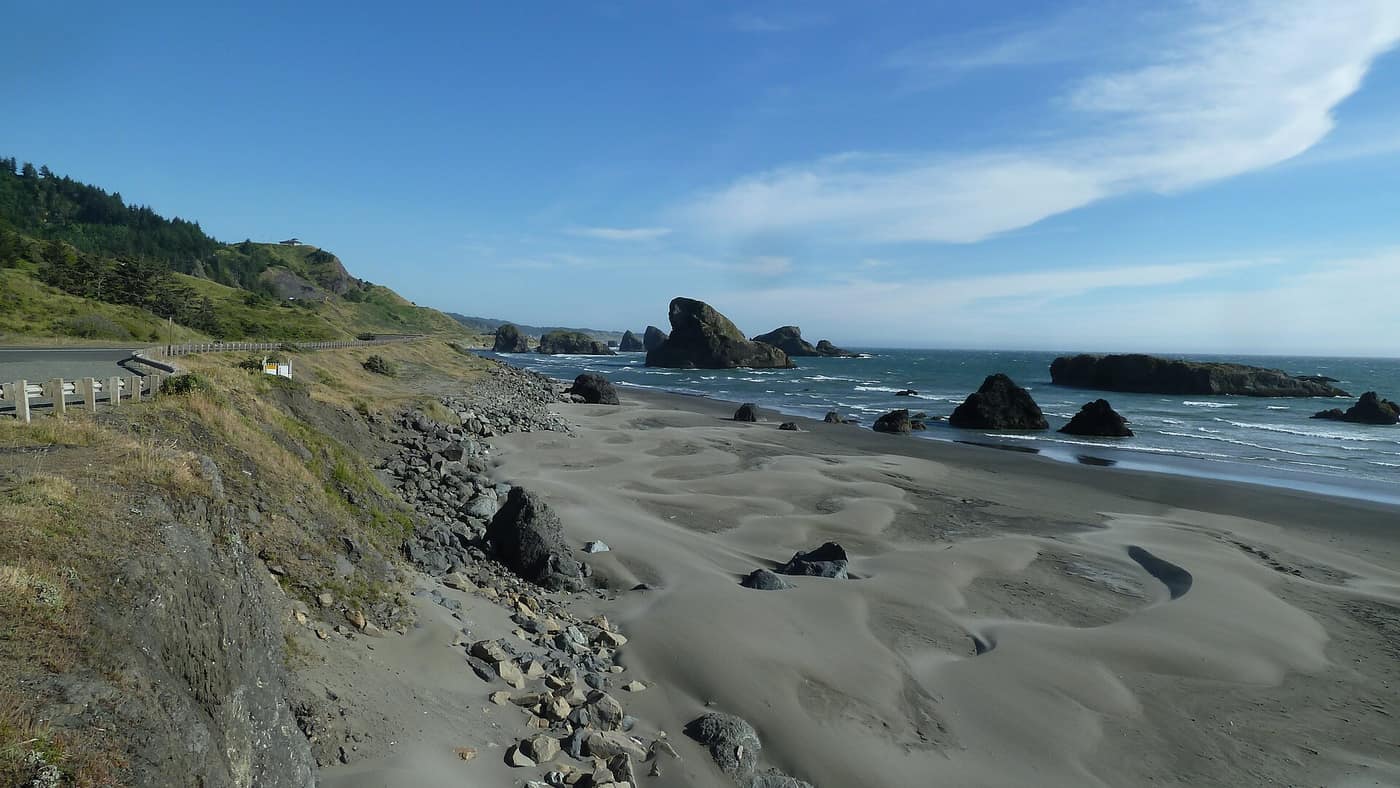
Wind-rippled sand and sea stacks at Pistol River Beach on the Curry County coast south of Gold Beach — Photo: Bastique / Wikimedia Commons (CC BY-SA 3.0)
What the Weather Means for Living Here
It means choosing a coast on its own terms. Mild temperatures through the year are a real draw, and so are rivers, beaches, and quiet. Wet winters, wind, and fog are part of the package. Our Gold Beach town guide and deep dive cover the town, Outdoor Adventures in Gold Beach covers what to do when the sun cooperates, and Moving to Gold Beach covers the day-to-day. If you can, walk a property on a gray day, not only a bright one.
Related reading
- Gold Beach Town Guide
- Gold Beach Deep Dive
- Outdoor Adventures in Gold Beach
- The Banana Belt Effect in Brookings
Previously on the blog: Cape Blanco: Oregon’s Westernmost Lighthouse
Next up: The Samuel H. Boardman Scenic Corridor Near Brookings →
Comfortable with a moody coast?
If a misty morning on the Rogue sounds like home, talk with Phuong about financing a Gold Beach home.
Get Pre-Approved Talk Financing With Phuong